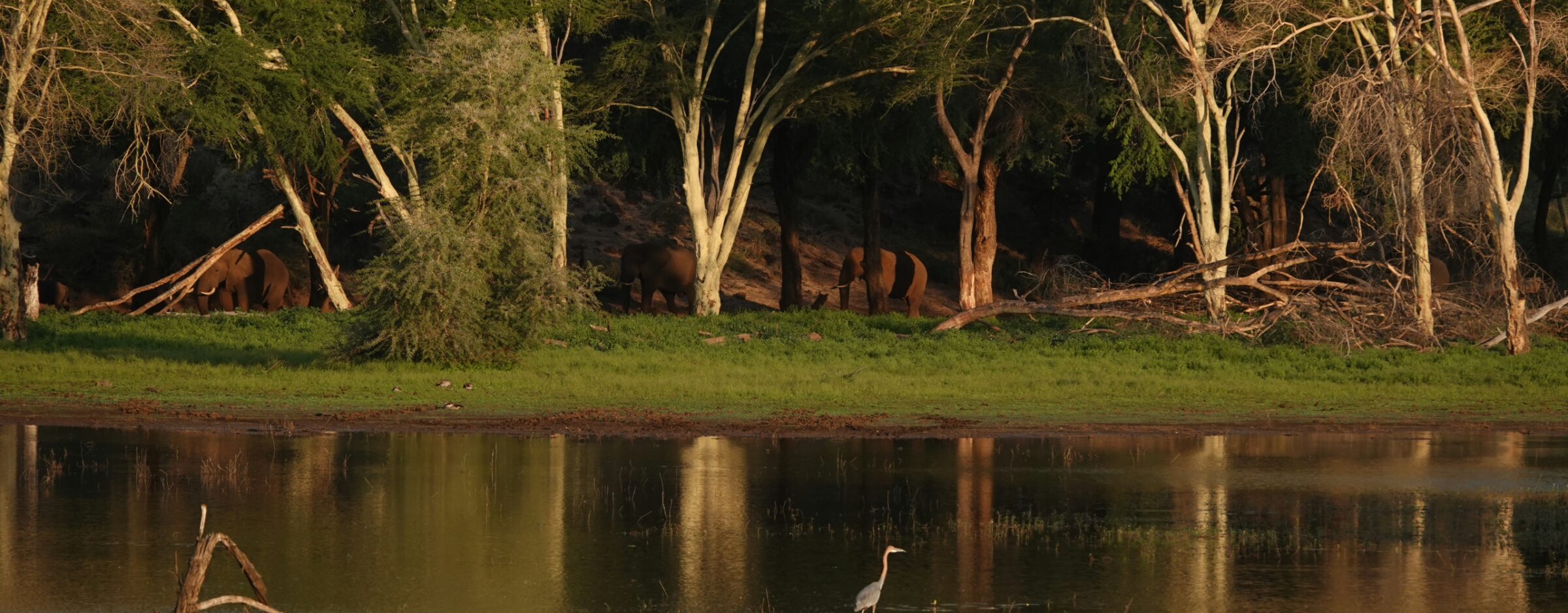
Image courtesy of Harald van Lennep
There is a rhythm to Pafuri that few places can match. The call of a fish eagle echoes across the water, pelicans glide over the pans, and the scent of damp earth and wild caper lingers after summer rains. These wetlands are alive, shifting with the seasons. Each visit brings a new story.
As PJ Massyn, CEO and co-founder of RETURN Africa, puts it: “Imagine a place where three countries meet, where rivers braid together and a mosaic of wetlands shifts with the rains.”
Seasonal Shifts
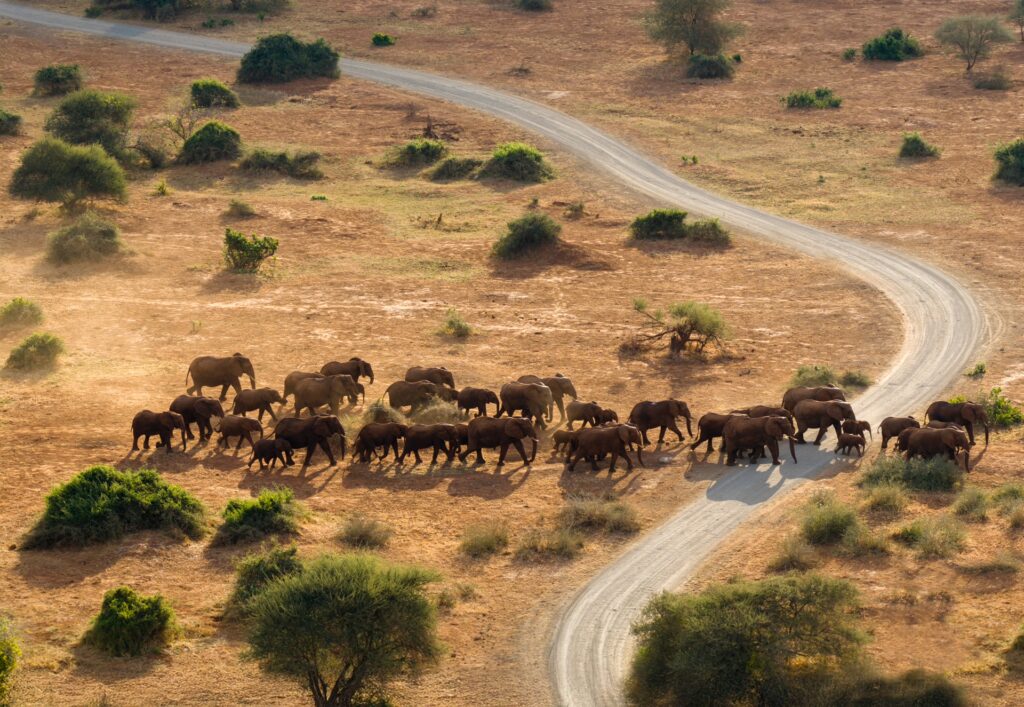
Pafuri is a land of dramatic contrasts. In the dry months (August – October), pans lie empty, and the landscape turns sunbaked, yet life gathers along the Luvuvhu River.
Godfrey Baloyi, General Manager of the Pafuri Collection, recalls: “Elephants and buffalo gather along the river. Just a couple of days ago, as guests were arriving, a breeding herd of elephants blocked the road. What an unforgettable welcome!”
When the rains arrive, everything transforms. Banyini, Reedbuck Vlei, and other pans that make up these Ramsar wetlands brim with water. Migratory cuckoos and broad-billed rollers return; by November, the woodland kingfisher calls to announce summer.
As Godfrey notes: “When the rains arrive, the wetlands brim with life with waterbirds everywhere. It is a birder’s paradise.”
Enos Mngomezulu, Hospitality Manager, adds: “Even after the rains stop, many pans hold water well into mid-winter, so you can still see them at their most beautiful.”
The Rhythm of Life at Camp
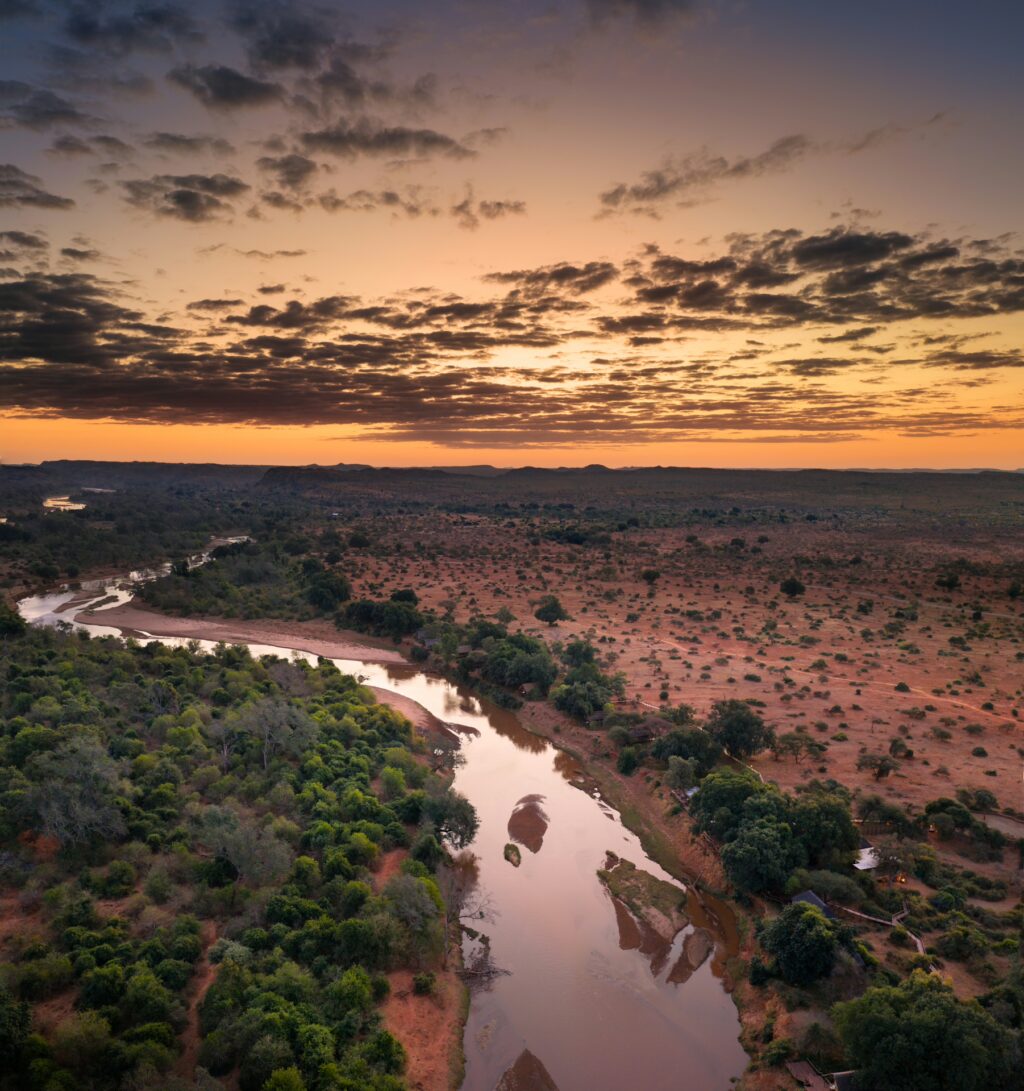
Seasonal change does not just shape the landscape; it shapes camp life. The cooler months bring a different kind of energy.
Enos explains: “Autumn, winter and spring are cooler months, and as staff we love this time. We also dine outdoor more often as the temperatures are good at this time of year.”
Summer is lush and alive – hot, rainy, and full of activity, especially with migratory birds. Lesser spotted eagles appear in their hundreds, filling the skies with movement and energy.

Moments That Stay with You
Scenes in Pafuri feel timeless. Godfrey remembers an evening and morning at Reedbuck Vlei: “We watched the waterbirds, and as the sun dipped below the horizon, the lilies closed their flowers. The next morning before sunrise, we returned to watch the lilies open again. It was a magical moment.”
For Enos, stillness is the magic: “I could take my binoculars and a picnic basket and sit at a pan with water. When the wetlands have filled up and all the waterbirds have gathered, it is truly magical.”
PJ offers a sensory portrait: “N’wambi Pan: a line of elephants through the fever trees, pelicans resting on a spit of land, the call of a fish eagle overhead. The smell is of damp earth and wild caper after summer rain. That combination of sight, sound, and scent captures the wetlands’ essence: timeless, yet always alive.”
Sacred Waters
Beyond wildlife, these wetlands hold deep cultural meaning for the Makuleke people. Mapimbi Pan, for example, is sacred.
Enos explains: “No one could fetch water using a metal or plastic utensil, only calabashes and clay pots. If someone broke the rule, strange sounds of drumming and children crying would follow, stopping only when elders performed a ritual with traditional beer and snuff to speak to the ancestors.”
Fishing was regulated by the Chief’s council, ensuring harmony between people and nature, a lesson for modern conservation.

Image courtesy of Marnus Swart
Why Ramsar Matters
The Makuleke wetlands are recognised as a Ramsar site, meaning they are wetlands of global importance.
PJ reflects: “It is recognition that the Makuleke wetlands are globally significant. They are the lifeblood of the Pafuri landscape, rising and receding with the seasons. Personally, it affirms something I felt the first time I set foot here: that Pafuri has a heartbeat and a value beyond borders and beyond economics.”
He adds: “Tourism here is not about numbers; it is about depth. Our role is to honour the community who own it while keeping ecosystems intact.”

Looking Ahead
Climate change and neglect threaten wetlands worldwide. PJ poses an important question: “If places like these are lost, it is not only biodiversity that disappears, but also memory, identity, and resilience. Will we be remembered as the generation that let such places vanish, or the one that secured them for the future?”
As Godfrey says: “Every season has its own magic.”
To experience the wetlands is to see Africa’s heartbeat.
Book your stay with the Pafuri Collection and see the wetlands for yourself.