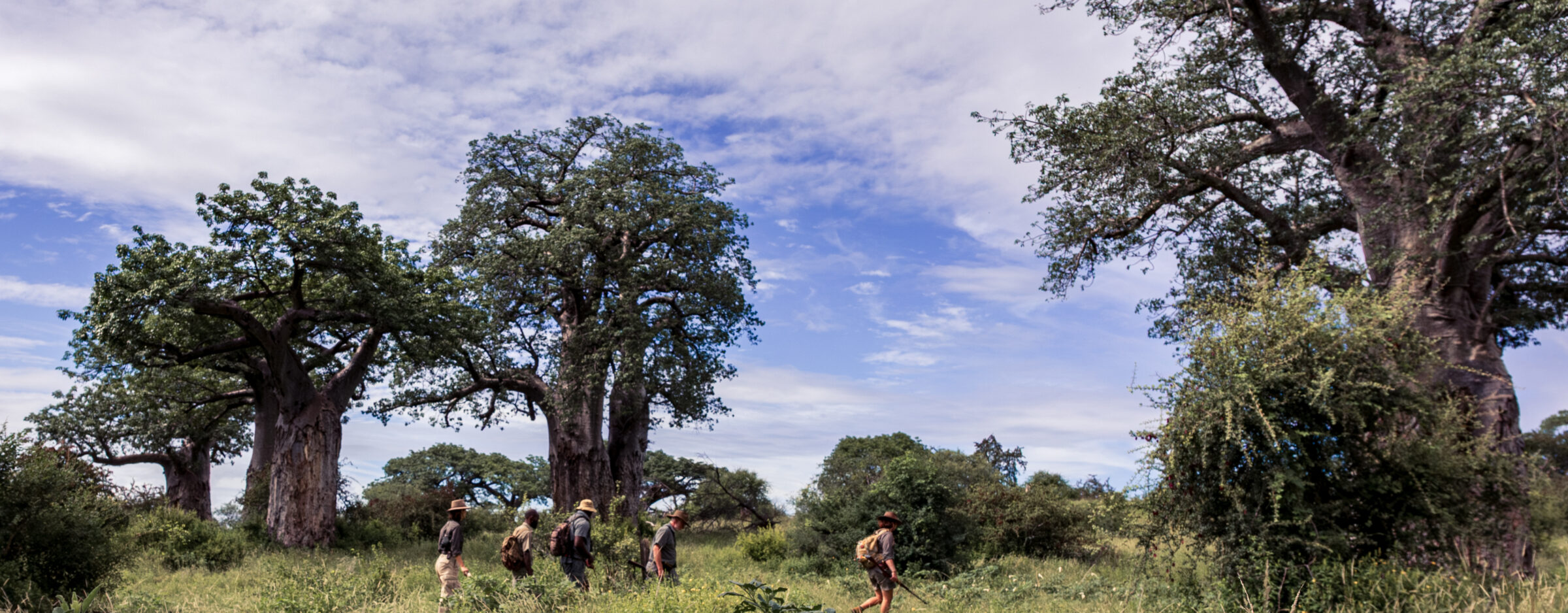
There is a moment, somewhere between the first footstep and the first elephant track pressed deep into the mud, when you understand why people come back to Pafuri on foot again and again.
No engine. No barrier between you and the wild. Just breath, birdsong, and the soft instruction of a guide who has spent a lifetime reading this land.
A walking safari in the Makuleke Contract National Park, in the far north of Kruger National Park, is unlike anything else in southern Africa. RETURN Africa’s two seasonal walking camps, Hutwini and Nkula, are the only way to experience it here. Open from April to October each year, each camp sleeps just eight guests across four tents. Each is solar-powered and WiFi-free. And each offers a slightly different version of the same extraordinary gift: the wild, on your own two feet.
If you’re planning your first Pafuri walking safari, or trying to decide between Hutwini and Nkula, this guide is for you.
What Actually Happens on a Pafuri Walking Safari?
Before we compare the two camps, let’s settle the first question most guests ask: what does a walking safari actually involve?
Arrival and the Pre-Walk Briefing
You’ll arrive at camp by mid-afternoon, after checking in at Pafuri Camp and being transferred to one of the walking camps by your guide. After settling in, guides gather the group, never more than eight people, for a safety briefing. This covers how to read your guide’s hand signals, what to do if a large animal is encountered, and, crucially, how to be quiet. The bush speaks. Your job is to listen.
Then you walk.
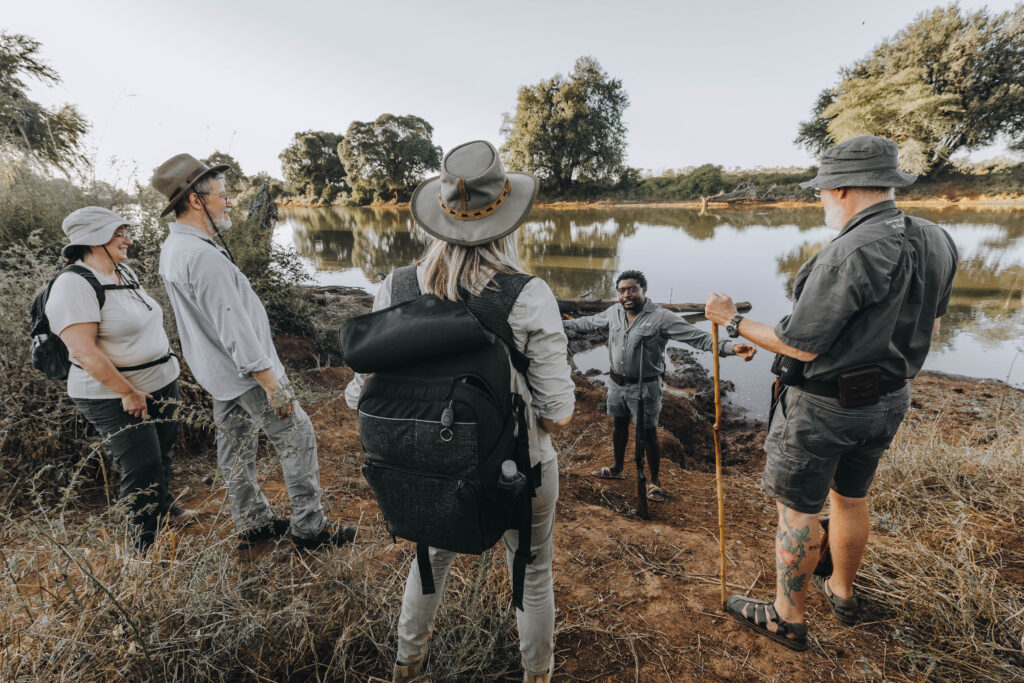
Each day follows a rhythm: an early-morning walk in the cool hours before the heat builds, a return to camp for breakfast, rest through the midday hours, then an afternoon walk as the light softens. Daily distances typically range from 5 to 20 kilometres, depending on terrain, sightings, and pace.
There is no rush. The point is not kilometres covered; it is moments experienced.
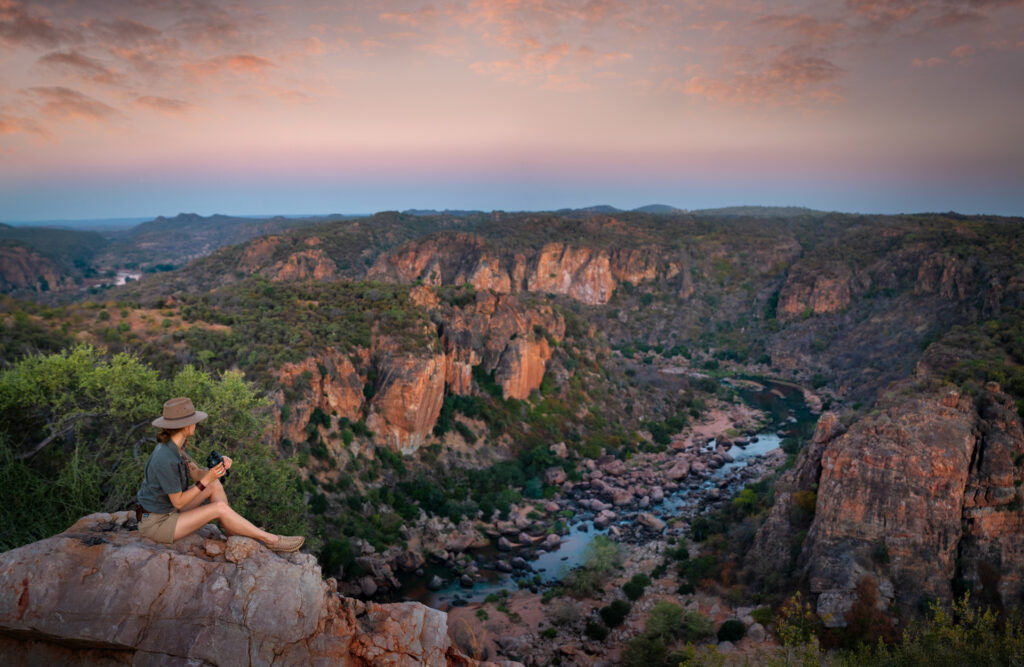
Walks take you through fever tree forests, across open floodplains, into ancient sandstone gorges, and along the edges of seasonal pans. Gorges like Hutwini and Lanner, are among the most dramatic walking terrain in any national park in the world.
On foot in Pafuri, every sense is engaged. You may:
- Read the story of an elephant’s night written in the sand, the depth of a footprint telling you its weight, direction, and speed
- Hear the sudden hush that falls before a predator pass
- Watch a breeding herd of elephant move through fever trees at first light
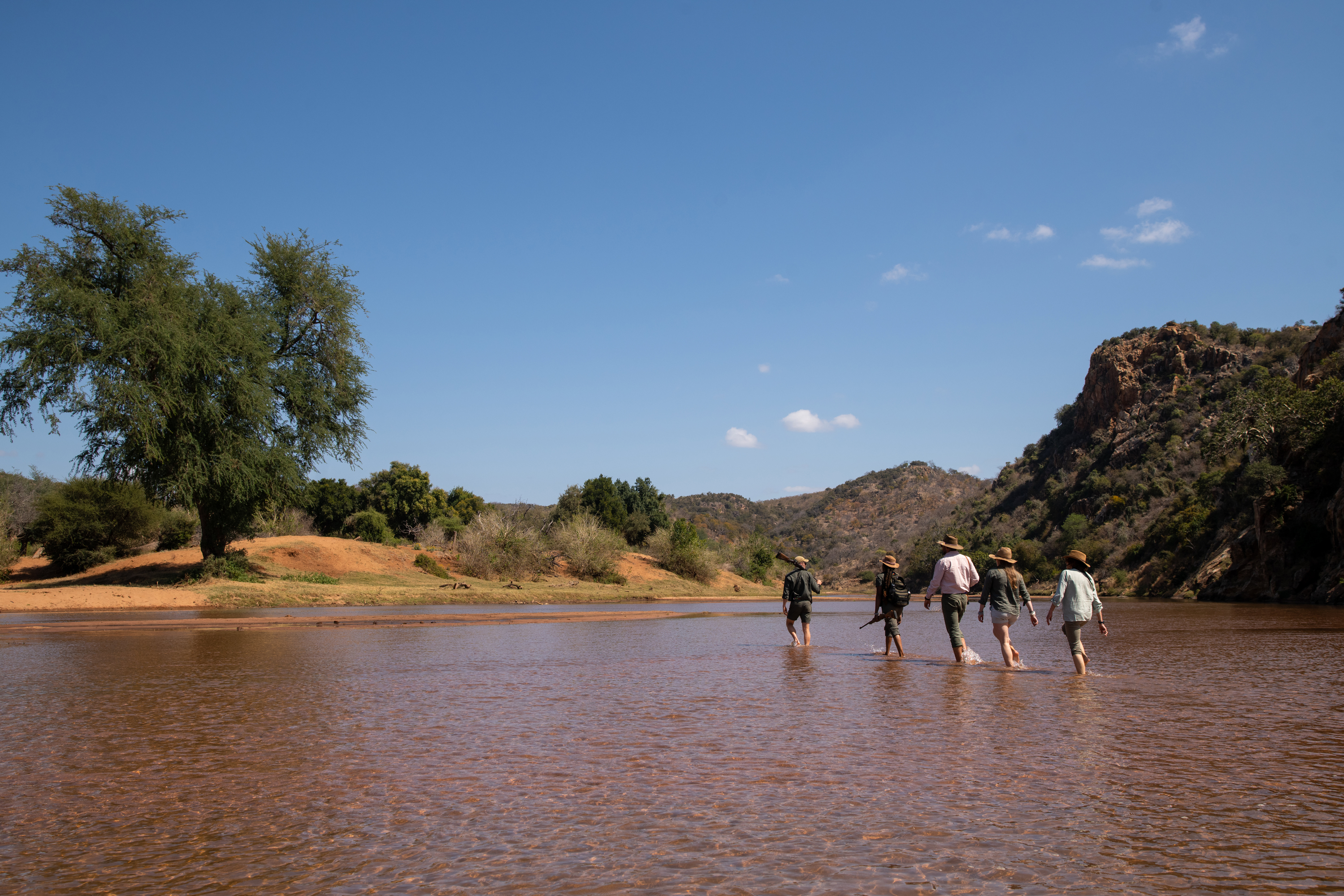
- Wade the shallows of the Luvuvhu River with sheer cliffs rising on either side
- Sit beside a drying pan as fish eagles, marabou storks, and predators circle the last of the water
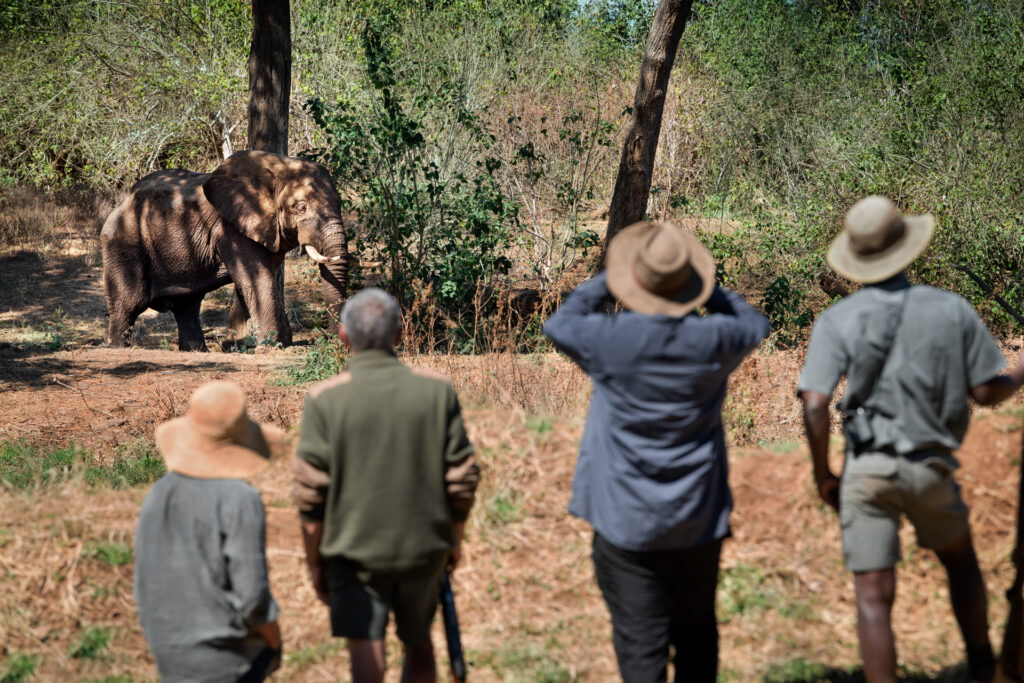
Guides like Cyril, Brent, Hlahla, Bongs, and Zach carry firearms and radios, but their most essential tools are their eyes, their instincts, and a knowledge of this land learned over years. Before every walk, they teach you their silent signals. A raised fist: freeze. An open hand, palm down: lower yourself slowly. A pointed finger: look there, quietly.
“On a couple of occasions our walks were spent safely negotiating herds of elephants, which was spectacular, unnerving, and utterly amazing in equal measure. Cyril was very attentive and we felt completely safe throughout.”
— Tacce, verified guest
Evenings at Camp
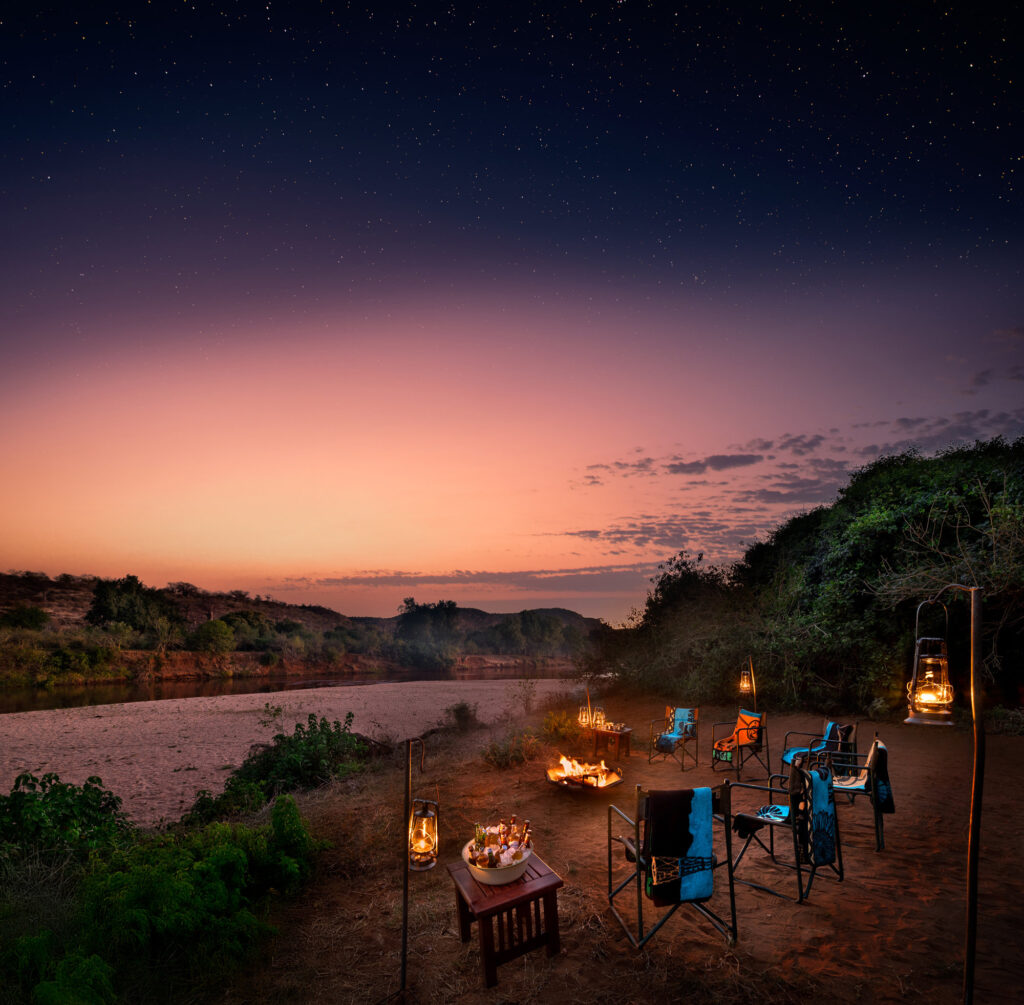
Back at camp, the day winds down the way days should: around a fire, under a sky uninterrupted by light pollution, with food cooked from scratch and stories that carry the weight of the afternoon. Then the hyenas begin to whoop somewhere out on the floodplains, and the nightjars start up, and you surrender to sleep in your tent, knowing the bush is still moving all around you.
Hutwini vs Nkula: Which Camp Is Right for You?
Both camps sit within the 26,500-hectare Makuleke Contract National Park. Both host a maximum of eight guests. Both are open from April to October. But they are not the same experience, and knowing the difference could shape your entire trip.
Hutwini Walking Camp
The feel: Spacious comfort with an upmarket feel, set deep in the wild.
Hutwini was extensively renovated ahead of the 2024 season and now offers four spacious sleeping tents with double or twin beds, a large and beautifully furnished mess tent, and en-suite bathrooms with outdoor hot bucket showers. It sits within a Ramsar-designated wetland, set among riverine forests, with baobab groves and palm-fringed floodplains close by along the Luvuvhu River.
The landscape around Hutwini is exceptionally rich and varied, ancient stone tools and Makuleke-era artefacts have been uncovered on walks here. The floodplains draw large concentrations of game, and the riverine corridors are among the finest birding terrain in the region, with the Luvuvhu and its fever tree forests drawing an extraordinary range of species.
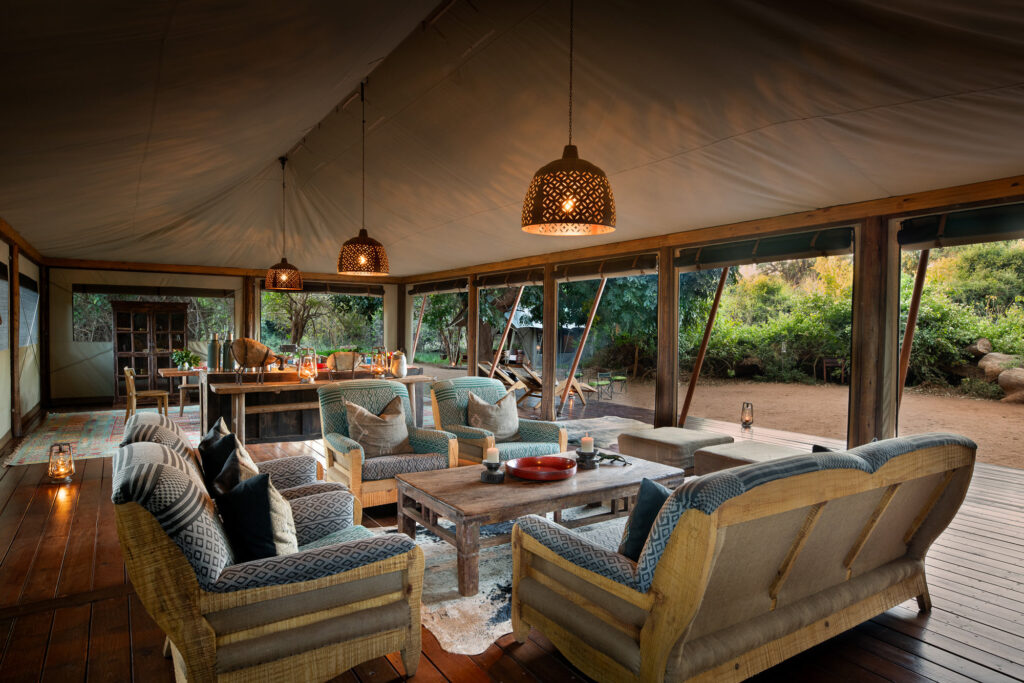
“The setting is exquisite, deep in the bush close to the Luvuvhu River. The tents were far nicer than expected: spacious, with comfortable beds, fresh linen, and an exceptional bathroom for a bush camp. The food was some of the best I’ve had on any safari. How they produce such outstanding meals in a small bush kitchen is beyond me. I felt completely safe in Big Five country on foot. I can’t wait to go back.”
— 676glynnisc, verified guest
Choose Hutwini if:
- This is your first walking safari and you want a well-appointed base, spacious tents, a furnished mess tent, and al fresco riverside meals, without sacrificing an ounce of wildness
- You’re travelling with a partner or companion who wants the full immersion of the bush alongside thoughtfully refined camp details
- You’re a birder: Hutwini’s Ramsar-designated wetland setting, fever tree forests, and proximity to the Luvuvhu River make it one of the most productive birding bases in the whole of Kruger
- You want evening meals and storytelling in a beautifully furnished mess tent, with the sounds of the floodplains carrying across from just beyond the firelight
Nkula Walking Camp
The feel: Stripped back, deeply wild, and off the beaten track.
Nkula is the simpler of the two camps, and for many guests that simplicity is exactly the point. Set beneath the shade of a magnificent Natal Mahogany tree, tucked into thickets of Croton on the banks of the Luvuvhu, Nkula offers four two-person tents with en-suite bathrooms and outdoor hot bucket showers.
Guests who choose Nkula tend to use words like immersive, raw, and exactly what I needed. Between walks, there is nothing to do except watch the birds in the Mahogany above you, read, and let the bush come to you.
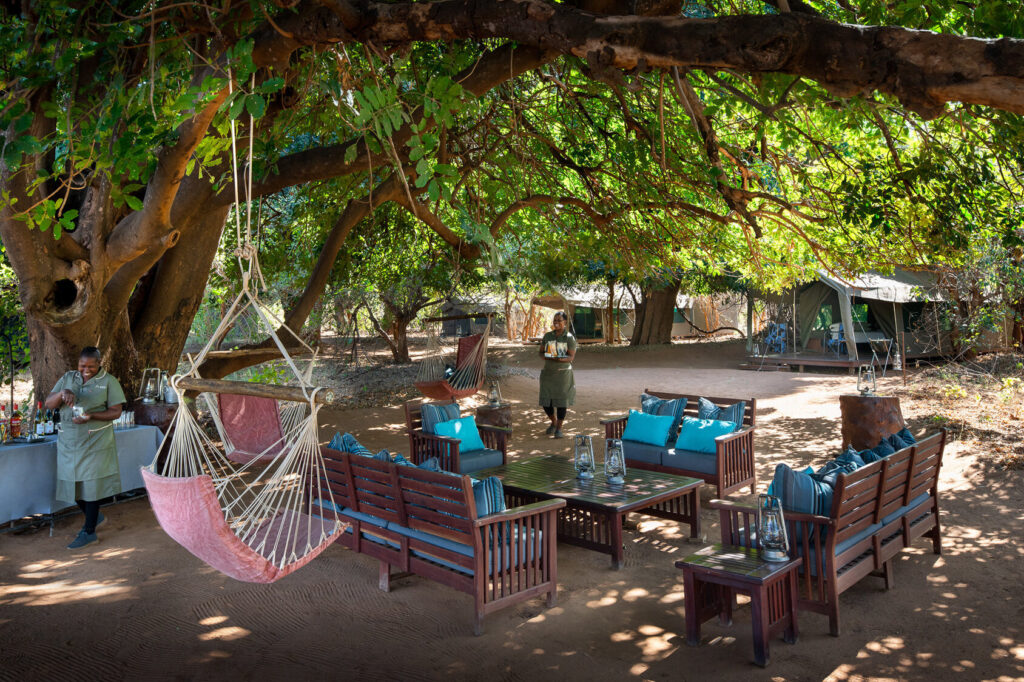
“We spent our time between walks watching birds beneath the Natal Mahogany. One of the highlights was showering under the stars, serenaded by the sounds of the nocturnal bush. Brent was brilliant, incredibly knowledgeable, and great fun. Our walks blew us away. The entire experience was immersive and peaceful. We can’t wait to return.”
— Tamalambe, verified guest
Choose Nkula if:
- You’re an experienced bush traveller who knows that the best camps give you the wild and nothing else to distract from it
- You’re a solo traveller or a couple who wants to sleep within earshot of the river, shower under the stars, and let the Natal Mahogany do the rest
- You want the most off-grid, pared-back walking safari experience in northern Kruger, and you want every evening around the fire to feel genuinely earned.
Walks commonly undertaken from both Hutwini and Nkula include:
- Lanner Gorge: widely considered one of the most spectacular walks in Greater Kruger, a sheer-sided ravine carved by the Luvuvhu River over millennia
- Hutwini Gorge: a dramatic sandstone ravine with views that open up as you climb, surrounded by concentrations of game on the floodplains below
- Luvuvhu River walks: wading the shallows with cliffs rising above, tracking hippo and crocodile from the bank
- Floodplain circuits: open terrain ideal for elephant, buffalo, and predator tracking as animals concentrate near permanent water
At a Glance: Hutwini vs Nkula
| Hutwini | Nkula | |
| Setting | Riverine forests, floodplains & river frontage | Croton thickets, Natal Mahogany |
| Feel | Comfortable and spacious | Simple, wild, immersive |
| Tents | 4 (up to 8 guests) | 4 (up to 8 guests) |
| Bathrooms | En-suite, outdoor hot bucket shower | En-suite, outdoor hot bucket shower |
| Dining | Large furnished mess tent | Open-air dining, pared back |
| Best for | First-timers, couples, birders | Experienced walkers, solo travellers |
| WiFi | No | No |
| Power | Solar | Solar |
| Season | April – October | April – October |
What to Expect: Practical Preparation
Fitness Level Required
A Pafuri walking safari is not a hiking challenge. Guides set a pace that suits the group, and the focus is always on observation rather than distance. That said, walks can extend to 10 kilometres or more, often across uneven terrain. A reasonable base level of fitness, comfortable walking for two to three hours at a time, is all that is needed.
Guests aged 16 and over may participate in bush walks.
What to Pack
- Neutral-coloured, lightweight clothing (khaki, olive, beige; avoid white and bright colours)
- Sturdy, well-worn walking shoes or boots
- Wide-brimmed hat and sunscreen
- A light fleece or jacket for early-morning walks (April and May can be cold before sunrise)
- Personal binoculars
- Camera with a silent mode
- Any personal medication
Leave the smart devices in camp. Both Hutwini and Nkula are deliberately WiFi-free. That is not a limitation; it is the entire point.
When to Go
Both camps operate from April through October, covering the dry season in northern Kruger. During this period, vegetation thins, water retreats to permanent sources, and game concentrates along the Luvuvhu River. Walks are cooler, visibility is better, and encounters are more frequent.
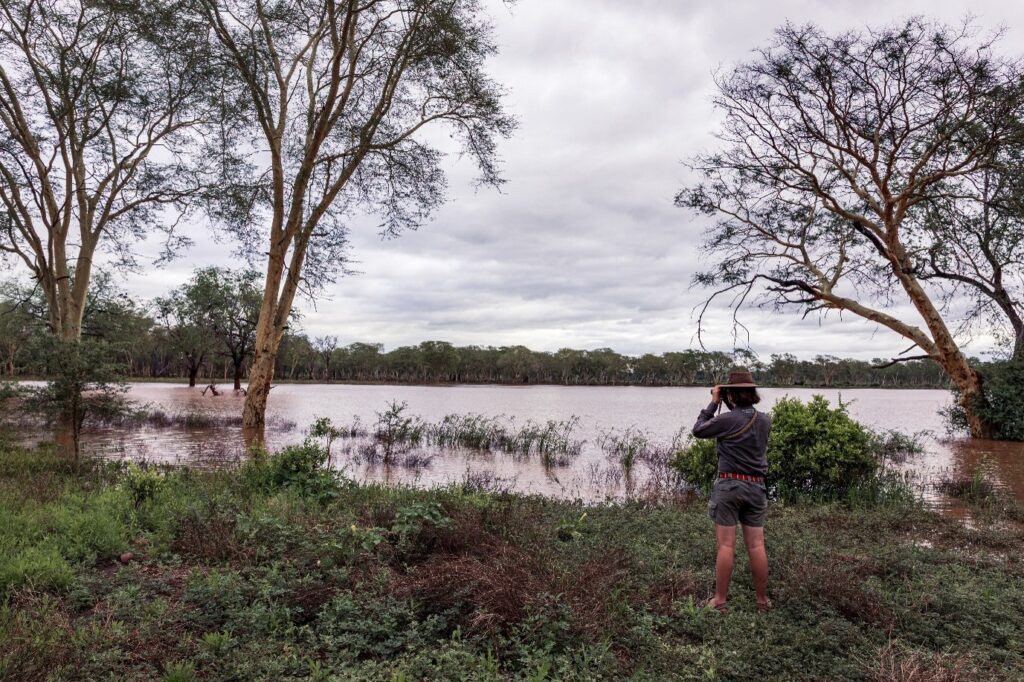
The 2026 season carries a particular gift: exceptional rainfall and multiple floods across the Luvuvhu River system have transformed the landscape. Seasonal pans are brimming, riverine forests are lush, and guests this year will witness a wilderness in an active state of renewal, a Pafuri that very few people have ever seen.
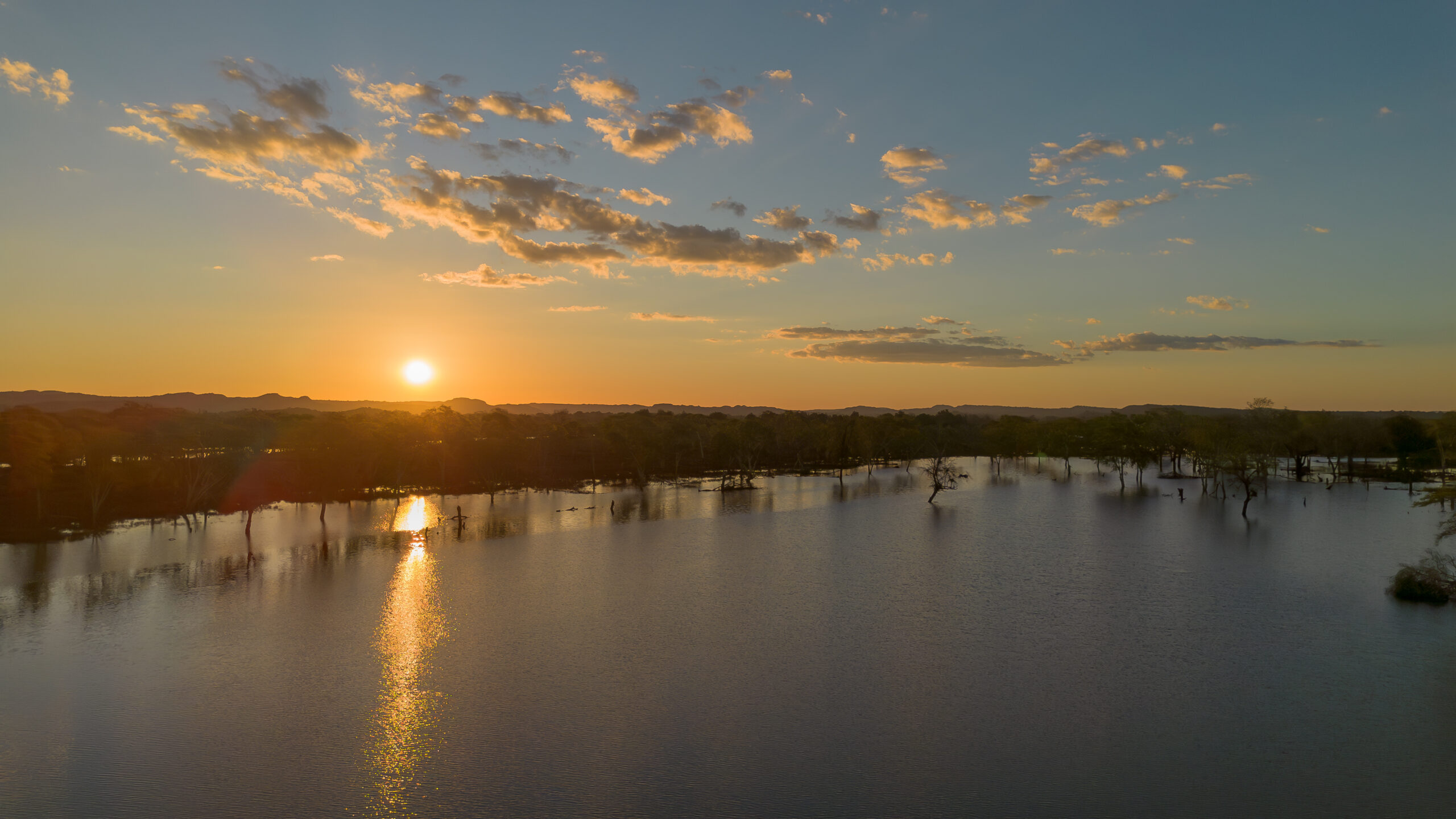
Pafuri sits in the far north of Kruger National Park, where the Luvuvhu and Limpopo Rivers converge within the Makuleke Contract National Park. RETURN Africa operates direct charter flights to Pafuri from Johannesburg, Hoedspruit, and Kruger Mpumalanga International Airport, making the journey as memorable as the destination. Self-drive and road transfers are also possible via the Pafuri Gate or Punda Maria, please take note of SANParks gate closing times in winter.
Why Pafuri, and Not Anywhere Else?
There are walking trails elsewhere in Kruger. But Pafuri is different.
The Makuleke Contract National Park is one of the most biologically diverse corners of Greater Kruger: a Ramsar-designated wetland with over 450 bird species, ancient baobabs, fever tree forests found nowhere else in the park, and a density of large mammals that follows the river rather than the roads. With just eight guests per camp, you have 26,500 hectares almost entirely to yourselves. The nearest other RETURN Africa property, Pafuri Camp, sits 20 to 30 minutes away by road, close enough to reach if needed, but far enough that neither walking camp ever feels anything other than completely remote and private.
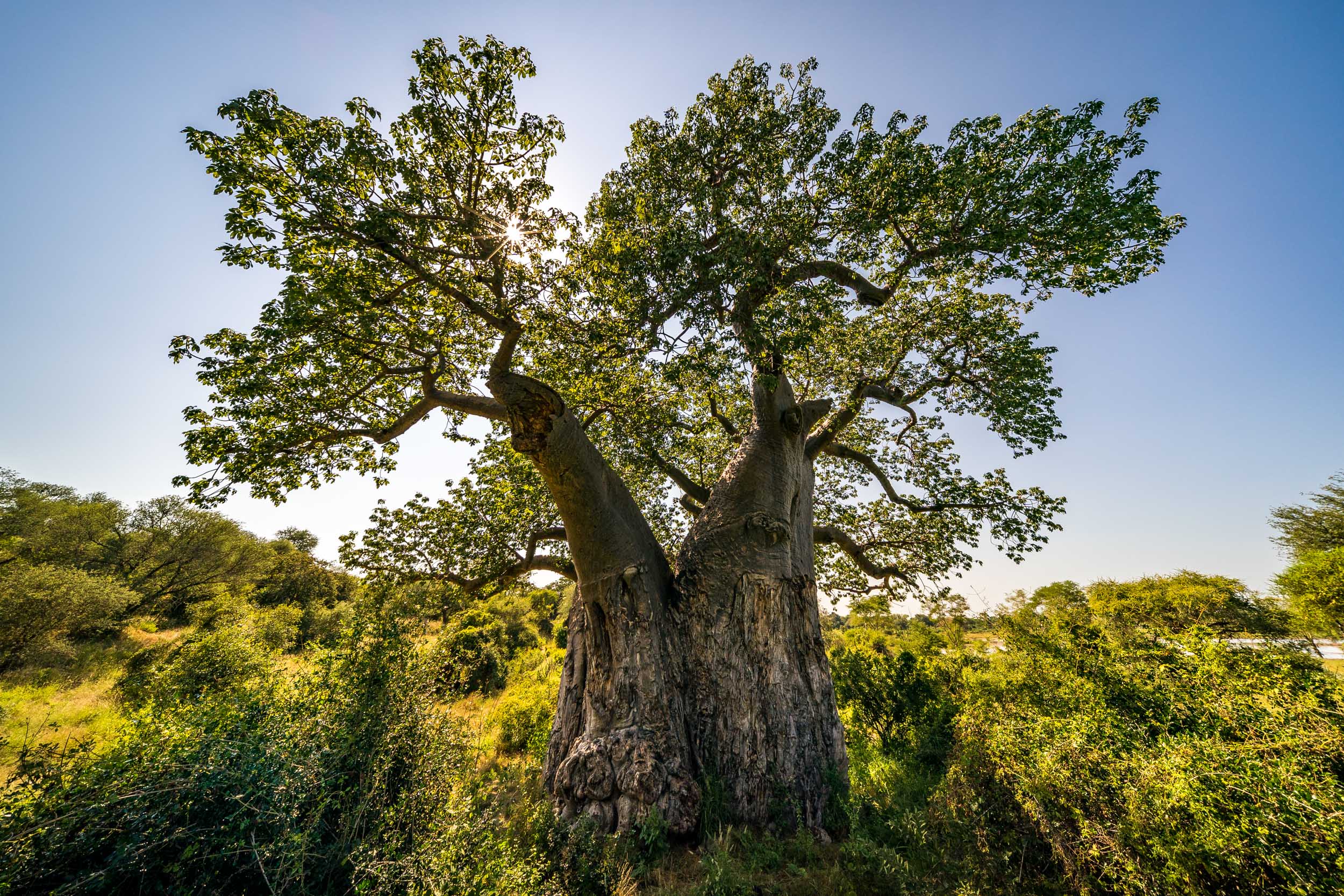
This is also ancestral land. The Makuleke people reclaimed their territory in 1998 in one of the most significant land restitution victories in post-apartheid South Africa. The concession was initially operated by Wilderness Safaris until the catastrophic floods of 2013. RETURN Africa took over the concession in 2015, rebuilt what the river had taken, and has since developed a conservation and tourism partnership with the Makuleke community that has become a benchmark for responsible safari in Africa. The guides, or their parents, who walk with you here were often born within this landscape. Their knowledge of it is not academic; it is inherited, lived, passed down and continuously renewed.
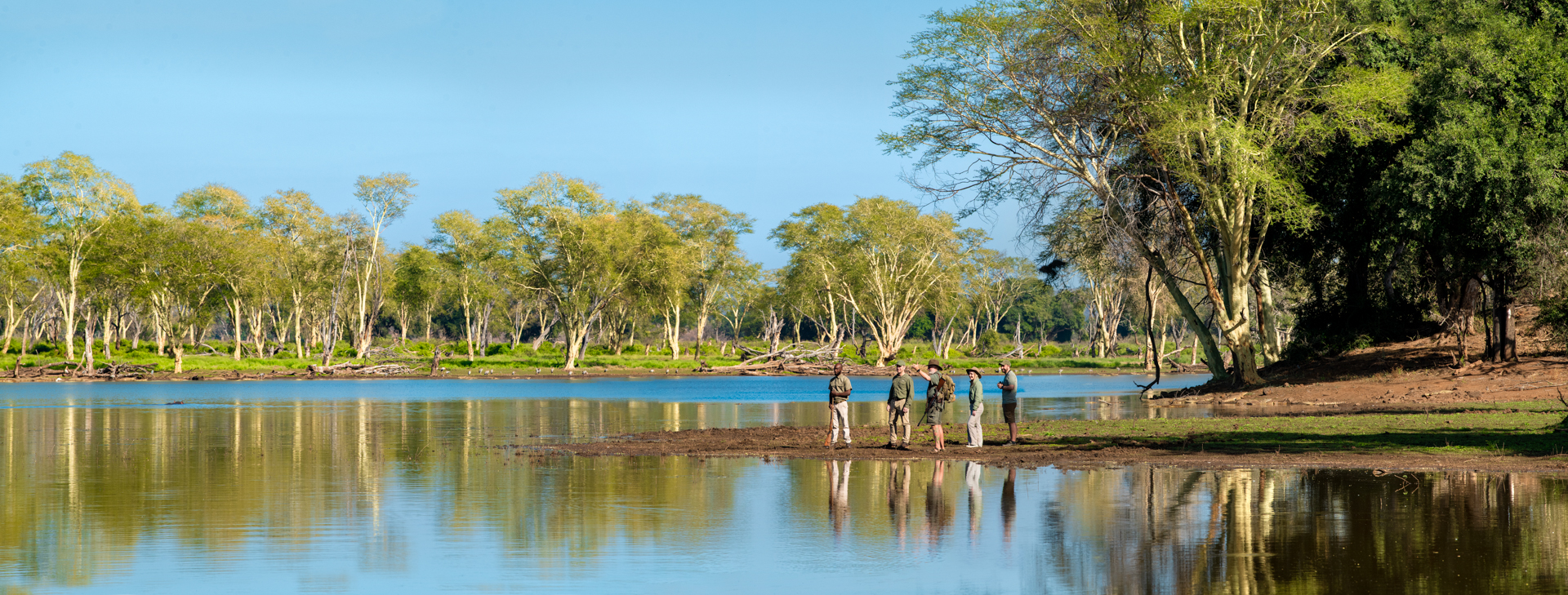
Every step you take here is a step on a living story.
“What a privilege to be able to walk in this pristine wilderness. Excellent in every respect. Already planning our next trip.”
— Katherine656, verified guest
Why a Pafuri Walking Safari Belongs on Your Bucket List
Whether you are building a once-in-a-lifetime itinerary, searching for something genuinely different in Africa, or simply ready to do safari properly, Pafuri answers the question before you finish asking it. It is the kind of place that travel writers run out of superlatives for, and guests return to year after year.
Here is why it appears on so many lists, from adventure travel to luxury safari to off-the-beaten-track Africa:
For unique safari experiences
No other walking camp operates in the Makuleke Contract National Park. Low road density within the concession means you may walk and never cross a road. No other vehicles share your walks. Pafuri is not a variation on the safari theme; it is a category of its own, the kind of experience that fundamentally changes what you expect from wilderness travel.
For adventure travellers
Walking through Big Five country on foot is not a sightseeing exercise; it is an act of full presence. You read tracks, move with the wind, and make decisions that matter. The Lanner Gorge walk alone, with its sheer drops and river crossings, rivals any wilderness walking route on the continent. For travellers who want their safari to feel earned, Pafuri delivers.
For luxury travellers
Exclusivity, food prepared from scratch in a bush kitchen, guiding of the highest calibre, and a setting of rare natural beauty: Pafuri offers all of this alongside genuine wildness. Hutwini Walking Camp in particular combines comfort and remoteness in a way that very few properties anywhere in Africa can match.
For off-the-beaten-track seekers
Pafuri sits where South Africa, Zimbabwe, and Mozambique converge, a tripoint wilderness that most visitors to Kruger never reach. Crooks corner is here, with its varied stories and a history of its own. The landscape here, ancient baobabs, fever tree forests, and a river system that floods periodically, is unlike anything in the rest of the park. Coming here feels like finding something that was always meant to be kept secret.
For responsible and conservation-minded travellers
The Makuleke land restitution of 1998 is one of the most celebrated conservation stories in post-apartheid South Africa. When floods devastated the original camps in 2013, RETURN Africa saw an opportunity not just to rebuild, but to do so properly: in genuine partnership with the community, with conservation and community at the centre of every decision. A decade on, that partnership is thriving. Your stay contributes directly to it. At a time when the purpose of travel matters as much as the destination, Pafuri offers something increasingly rare: a place where being there genuinely makes a difference.
For first-time walking safari guests
The question is never whether Pafuri is too wild, but whether guests are ready to stop being observers and start being present. The answer, overwhelmingly, is yes. RETURN Africa’s guides have been leading first-timers through this landscape for decades. In their hands, the bush is not intimidating; it is a place of extraordinary discovery.
For birders
With over 450 recorded species, including the Pel’s fishing owl, the African broadbill, the Narina trogon, and concentrations of raptors and waterbirds along the Luvuvhu, Pafuri is one of the most significant birding destinations in South Africa. The walking pace, the early starts, and the riverine setting make it particularly suited to serious birders.
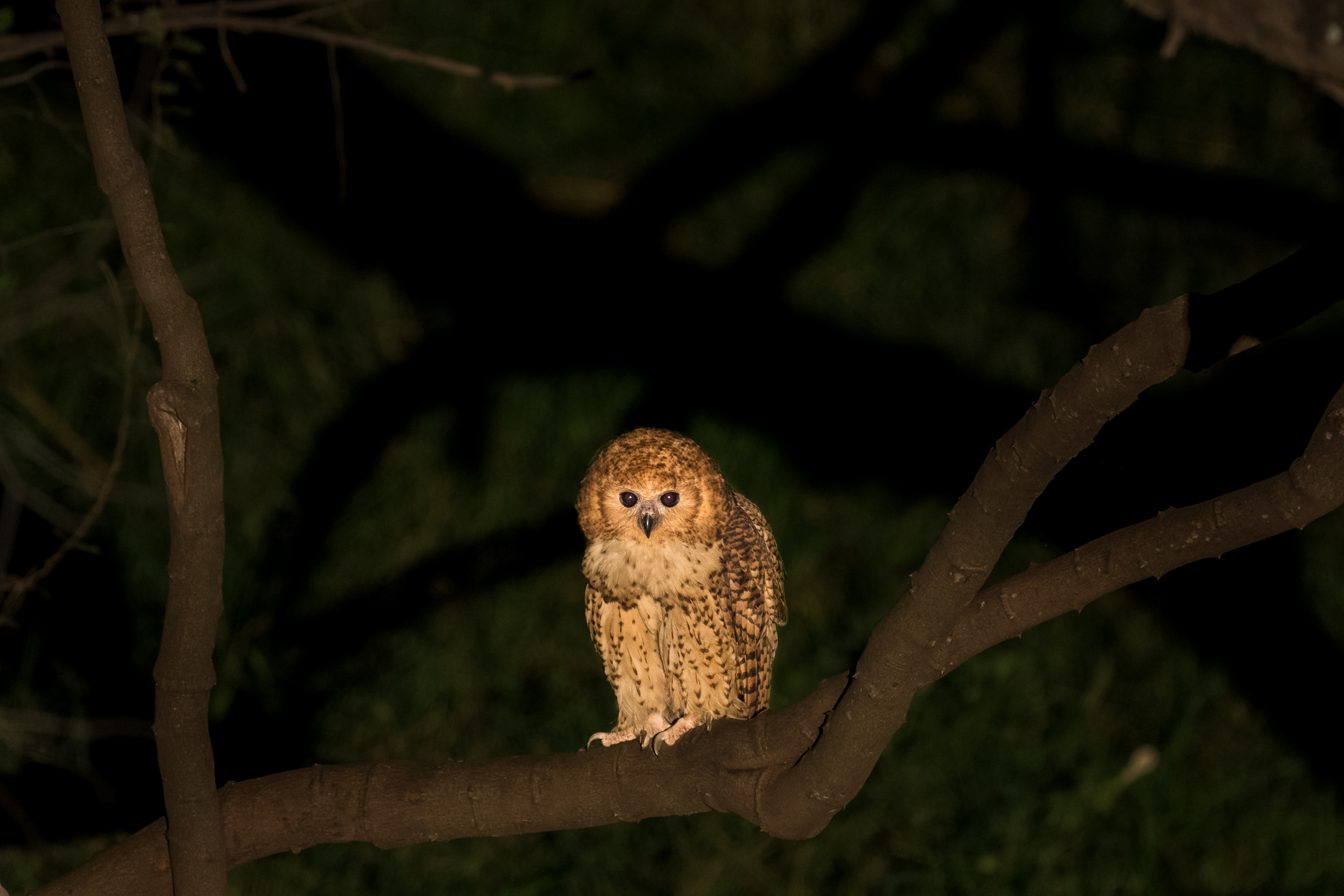
Pafuri pairs exceptionally well with Johannesburg, Cape Town, the Mozambique coast, and Victoria Falls, making it a natural anchor for a broader southern African journey. Three nights at a walking camp is enough to transform the rhythm of any trip. Most guests say it becomes the part they talk about longest.
Ready to Walk?
Hutwini and Nkula Walking Camps are open from April through October, with limited availability each season. Bookings for the 2026 season are moving quickly, particularly following the extraordinary landscape renewal currently unfolding across Pafuri.
Book your Pafuri walking safari
Explore Hutwini Walking Camp
Explore Nkula Walking Camp
RETURN Africa operates the Pafuri Collection in the Makuleke Contract National Park, northern Kruger National Park, in partnership with the Makuleke community. Walking safaris run from April to October each year.
Frequently Asked Questions
What is the difference between Hutwini and Nkula walking camps?
Hutwini offers a more spacious, upmarket camp experience with a large furnished mess tent and a setting among fever tree forests and floodplains along the Luvuvhu. Nkula is simpler and more pared back, set beneath a magnificent Natal Mahogany on the riverbank. Both host a maximum of eight guests and offer the same guided walking safari across the Makuleke concession.
Do I need walking safari experience to visit Pafuri?
No. RETURN Africa’s guides tailor every walk to the group. First-time walking safari guests are warmly welcomed at both camps. The pace is set by interest and ability, not fitness targets.
What animals can I expect to see on a Pafuri walking safari?
The Makuleke Contract National Park is home to elephant, eland, leopard, spotted hyena, hippo, crocodile, African wild dog (occasional), buffalo, zebra, impala, bushpig, kudu, nyala, and a remarkable diversity of smaller mammals and reptiles. With over 450 bird species recorded, it is also one of South Africa’s premier birding destinations.
Is a Pafuri walking safari safe?
Yes. All RETURN Africa guides are professionally qualified and carry firearms, radios, and satellite phones when necessary. Every walk begins with a thorough safety briefing, and guides are highly experienced in managing large animal encounters safely.
When is the best time to visit Pafuri for a walking safari?
April through October, the dry season, is ideal, with thinning vegetation, animals concentrating near water, and cooler morning temperatures for walking. April/May and August/September are particularly popular months.
Are the camps WiFi-free?
Yes. Both Hutwini and Nkula are solar-powered and intentionally WiFi-free. Charging facilities are available for cameras and devices, but connectivity to the outside world is limited. Most guests describe this as one of the best things about the experience.
How does a Pafuri walking safari differ from a standard game drive safari?
On a game drive, you observe the bush from a vehicle. On a walking safari, you move through it at the pace of the animals themselves. You read tracks and signs, learn to interpret sounds and smells, and engage with the landscape in a way that no vehicle-based experience can replicate. The result is a deeper, more personal connection with the wild.
Can I combine a walking safari with other RETURN Africa properties?
Yes, and many guests do. Pafuri Camp, a larger lodge within the same concession, pairs well with a walking camp stay. A combined itinerary is a popular option for guests wanting to experience both the walking camp intimacy and the broader Pafuri landscape.