They don’t arrive with itineraries. They arrive with questions.
That’s what Memory Masuku, Guest Relationship Manager at Welgelegen House, notices first about winter guests. Summer visitors step through the door already chasing the next thing, the sunset, the mountain, the long golden day. Winter guests are different. They carry a quiet uncertainty, a wondering if they’ve made the right choice. But beneath that, she says, there is something else: an openness. An absence of rush. A readiness to be surprised.
Cape Town surprises them every time.
The City Exhales
Winter in Cape Town, June through August, with the shoulder months of May and September offering their own grace, is not the city holding its breath. It is the city breathing properly, perhaps for the first time all year.
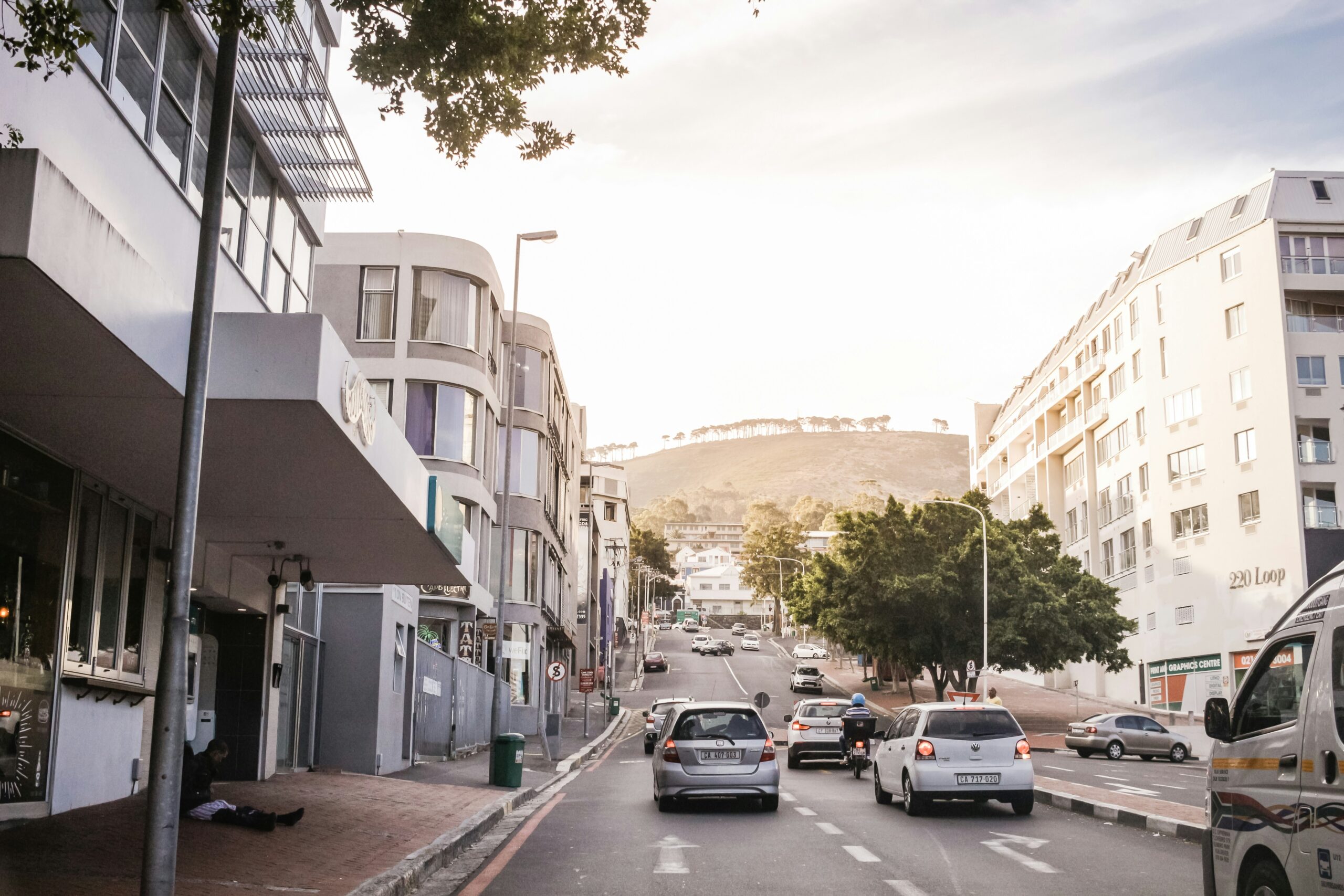
The crowds that descend each December thin to something manageable. The restaurants you’ve been eyeing become bookable. The roads along the Atlantic Seaboard move freely. Kloof Street, that humming artery of cafes, wine bars, and independent restaurants just steps from Welgelegen House, becomes a different place entirely. “In summer, Kloof Street is a runway,” says Ayanda Prince, General Manager of Welgelegen House. “In winter, it becomes a village. You see the locals reclaim their favourite spots. It feels cosy and exclusive. You can actually hear the city breathe.”
There is a particular kind of pleasure in this, the pleasure of a world-class city experienced at human scale. Of walking into a restaurant and being seated immediately. Of having a conversation with a sommelier who has time to talk. Of noticing things, because you are not being swept along.
The Mountain Wears Different Light
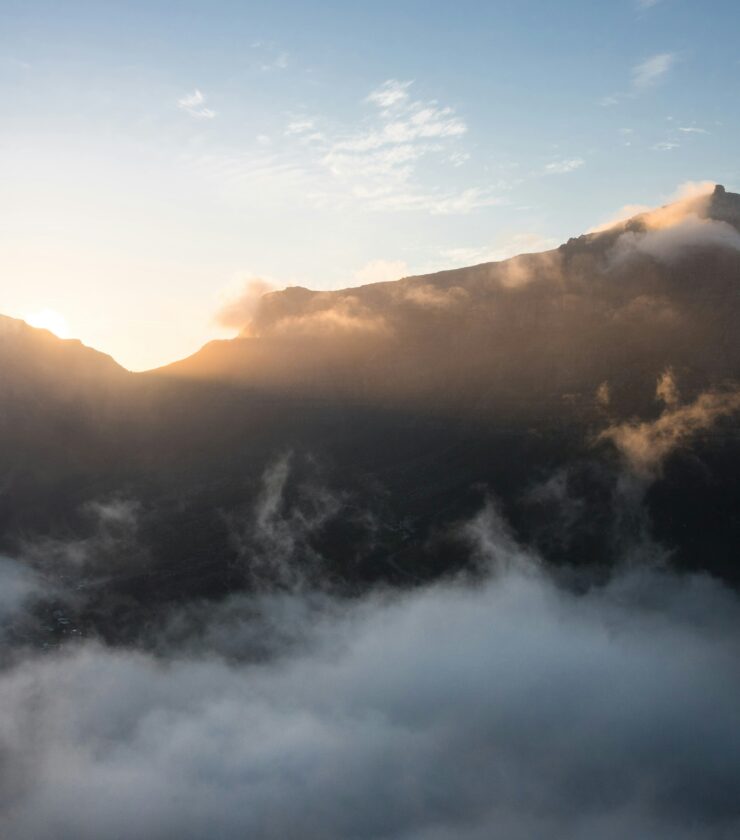
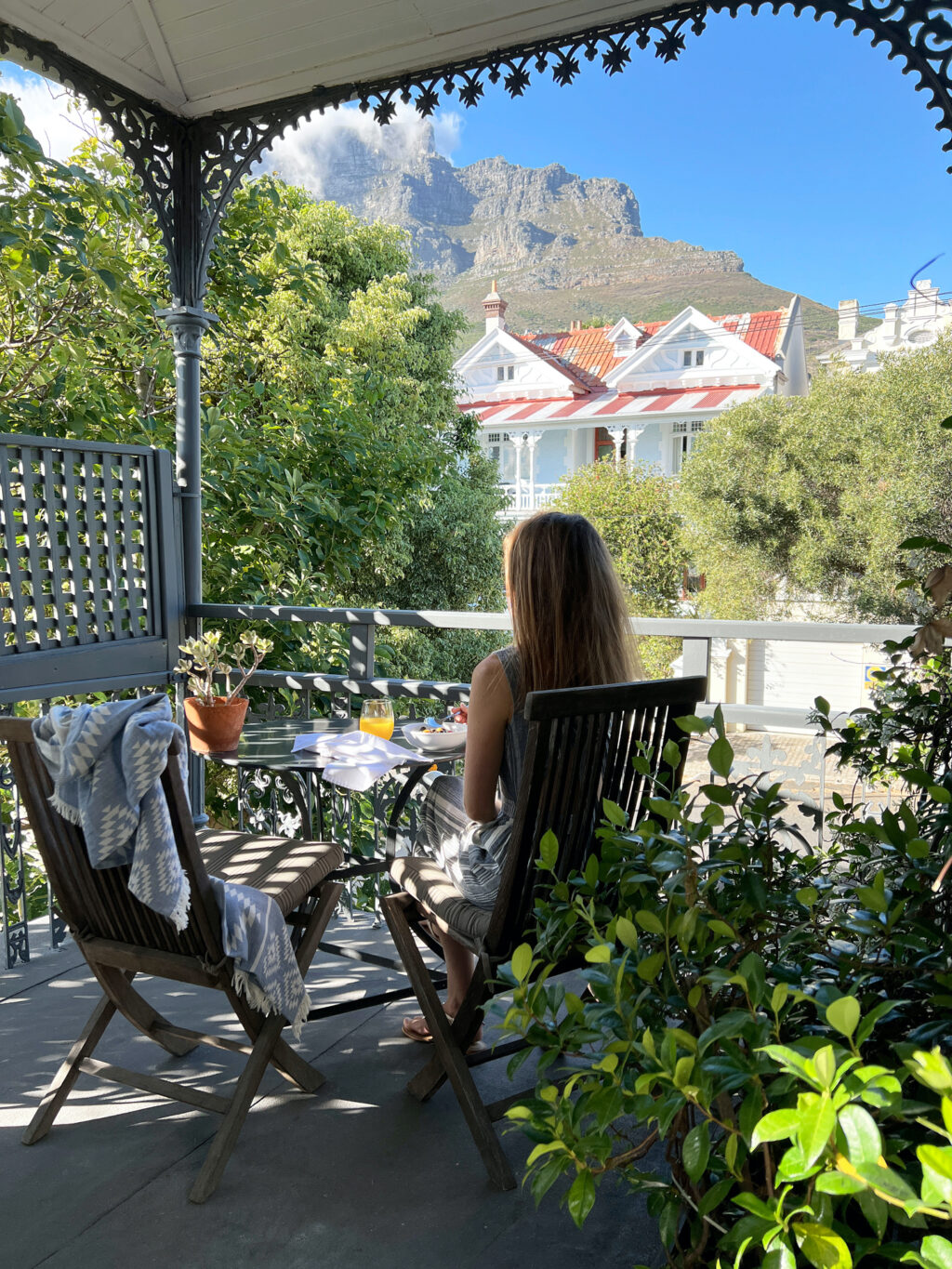
From the courtyard at Welgelegen House, Table Mountain is a constant presence. But in winter, Ayanda says, it becomes something more. “After rain, it looks freshly washed. The waterfalls are visible from a distance, and the air is so clear it feels like you can touch the rock face.” On overcast mornings, when the clouds sit low against the slopes, the house itself seems to draw inward, “it creates a private, cocoon-like feeling,” he says. “Like the mountain is holding you.”
The light does something remarkable in winter that photographers and painters have known for centuries. It loses the harsh, bleaching quality of summer and becomes angled, golden, and dimensional. Shadows have depth. Colours saturate. The mountain’s fynbos, olive-grey in the dry heat, turns an extraordinary deep green after the rain.
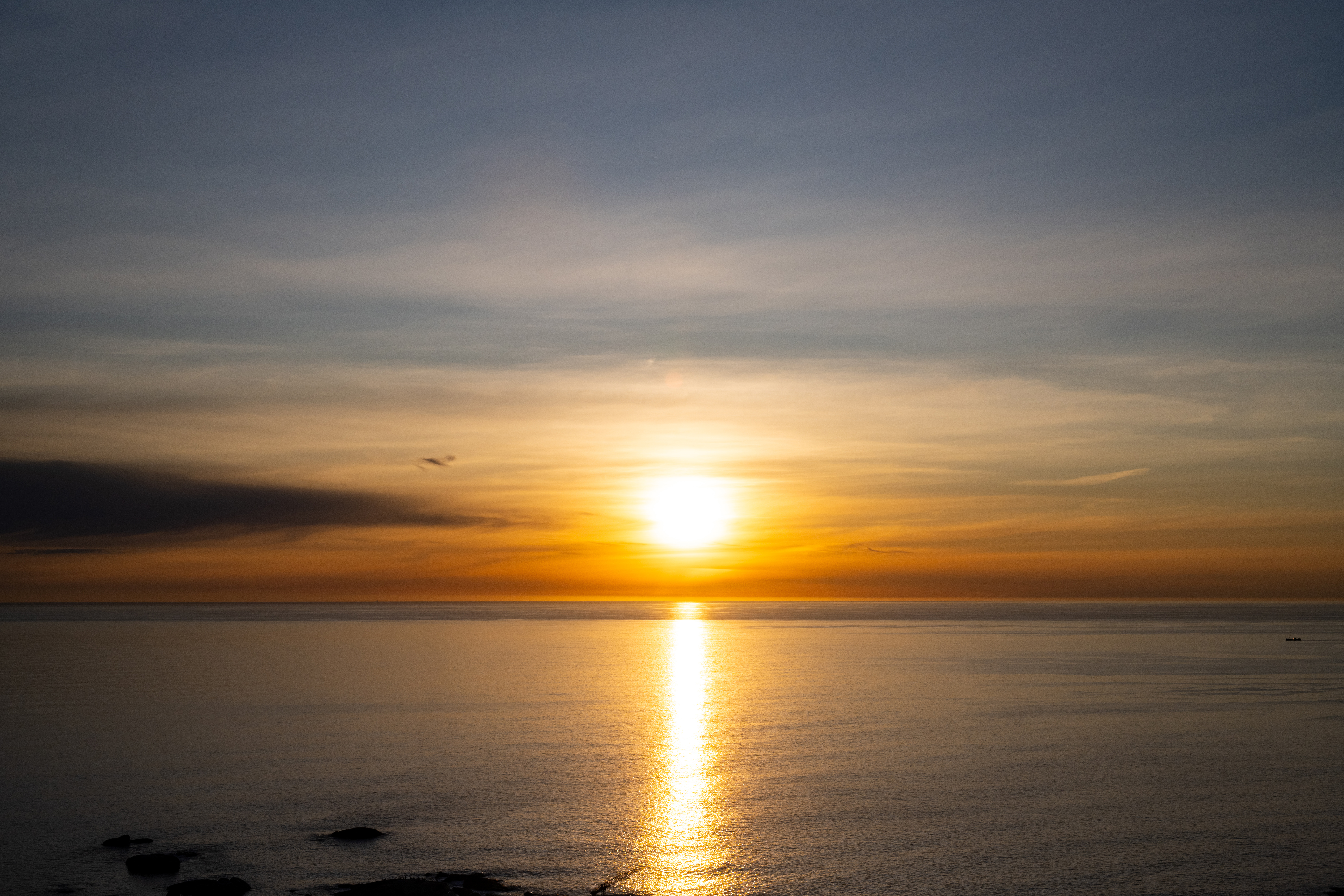
From An African Story in Camps Bay, above the Atlantic on the other side of the mountain, the light shifts in a different way. The sun, which in summer sets behind the 12 Apostles range toward Hout Bay, migrates through winter directly in front of the house, then further north toward Clifton and Signal Hill, before tracking back again in spring. Simon Omurye, Villa Manager at An African Story, has watched guests try to document this movement over years. “I had a guest who came twice a year,” he says, “once in January and again in October, because he wanted to catch that movement. When I first told him about it, he doubted me. And then he started to come back.”
This migration of the sun, drawing arcs across the horizon month by month, is one of the quieter spectacles the Cape offers. You won’t find it in any brochure. You won’t see it if you only come in summer.
When the Ocean Turns
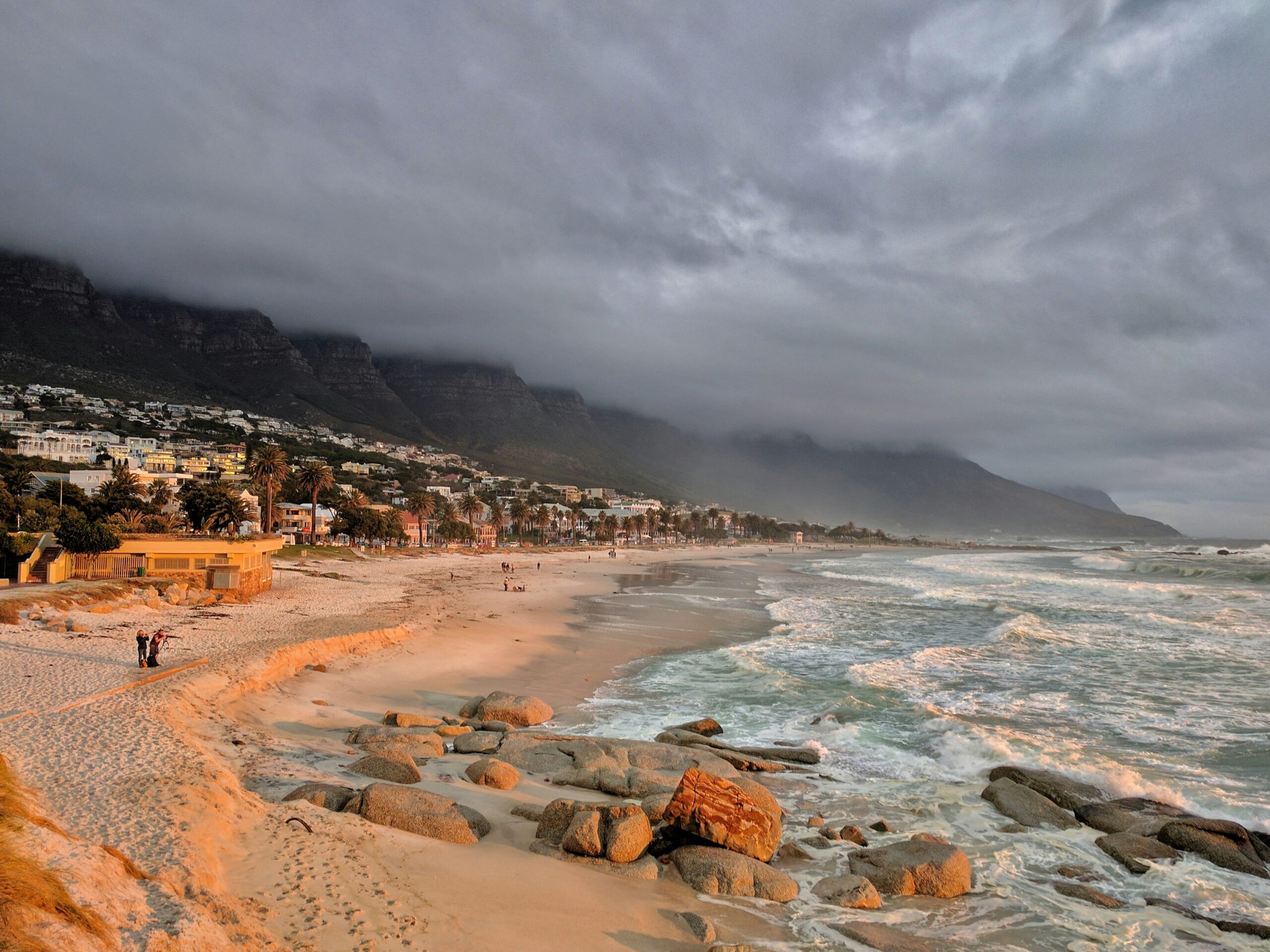
The Atlantic in winter is not the Atlantic of summer postcards. It turns a deep, shifting grey. And across its surface, where the mountain shelters the bay from the strongest wind, something happens that Simon’s American guests have a name for: white caps. Not the large waves of a storm, but a gentle stippling of the water’s surface, the ocean folding softly over itself in small, rhythmic ridges. “You have this beautiful carpet,” Simon says, “all in pockets. The Americans call it the calm of the ocean. They say they’ve only seen it in one other place, somewhere in Mexico.”
When the winter rain comes to Camps Bay, it comes quietly. Not the dramatic deluges of other climates, but consistent, soft, almost considerate. Guests at An African Story open their windows and doors to let the fresh air in. They wake early to watch the fog lie over the bay. They sit on the terrace with coffee, in mild winter sun that Simon describes as “sweet”, a word that is exactly right. “You can taste it, you can feel it, you can talk to it,” he says. “You can sit under that sun the whole morning and it will not burn you. It is just therapy. There is no need to pay for any treatment.”
The Warmth You Come Back To
When the city outside cools and the light drops early, what you return to matters. Both Welgelegen House and An African Story understand this in their bones.
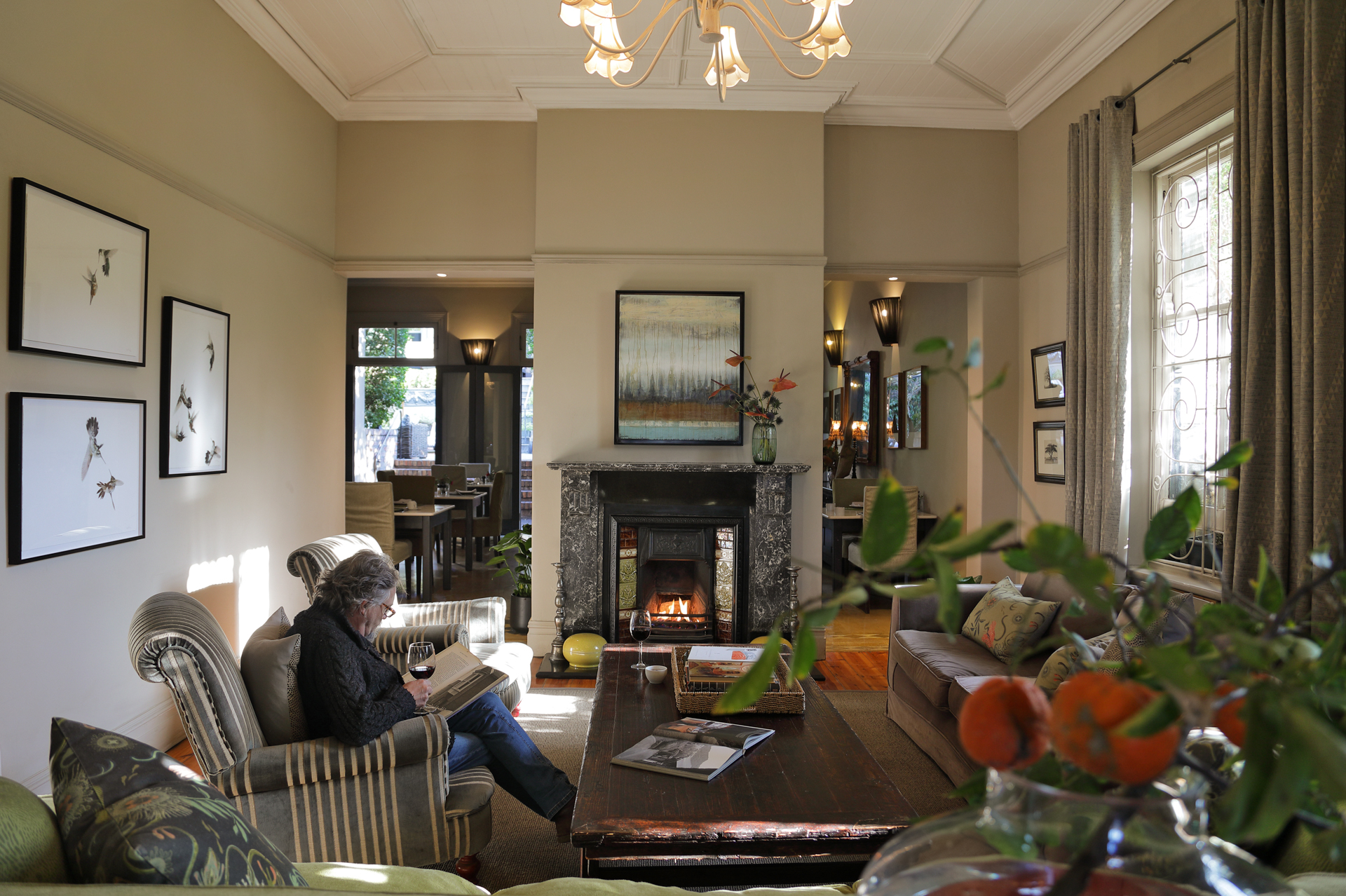
At Welgelegen, the team shifts into what Ayanda calls a “wrap-around welcome.” Rooms are perfectly heated before arrival. The breakfast offering tilts toward comfort. The small details, a warm drink waiting, the right blanket on the right chair, are attended to with care that feels intuitive rather than scripted. The house, originally two Victorian homes on a quiet street in Gardens, has been welcoming people through Cape winters since long before RETURN Africa’s tenure. It knows how to hold a guest.
At An African Story, winter changes the house more dramatically. Lights are turned to their warmer, lower settings, lights Simon keeps off entirely in summer. The fireplace goes on. The underfloor heating warms the tiles so that guests move through the villa in bare feet, in that particular luxury of being warm from the ground up. “In summer, maybe the house is not so important,” Simon says. “But in winter, the house is the centrepiece of the whole vacation. You feel it more.”
He speaks of a winter stay that has stayed with him: the Liba family, who arrived uncertain, having been convinced by Simon that Cape Town’s winter is nothing like Europe’s. During one day entirely at the villa, by choice, not necessity, he arranged a private chef, a marimba group, traditional Cape décor, dancing, and a firelit evening that gathered everything the house is capable of into one night. The family danced. They ate. The fireplace burned. “Mariam Liba said to me,” Simon recalls quietly, “Simon, this is what heaven is made of.”
A Season of Particular Pleasures
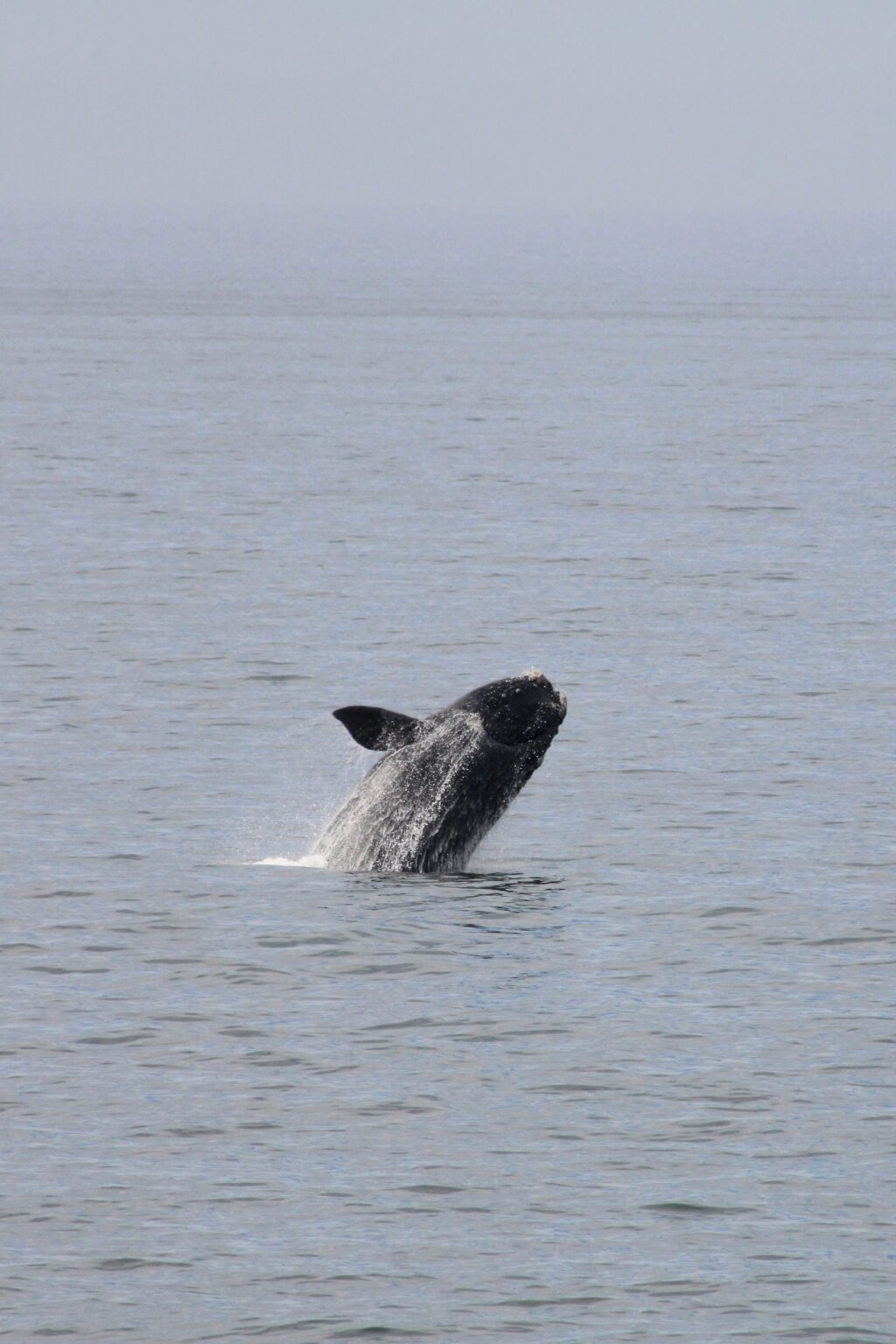
Cape Town in winter is also, quietly and specifically, one of the great wildlife seasons in southern Africa. From June, the Southern Right Whales arrive from the Antarctic to calve in the warm shallows of the Western Cape coast. They can be spotted from the shore at Hermanus, one of the finest land-based whale watching destinations on the planet, or from the water on a boat excursion from Gansbaai, just under two hours from the city. Memory has seen guests catch their first whale sighting not even on a dedicated excursion, but simply from the V&A Waterfront promenade, mid-afternoon, on an ordinary day. It is that kind of season.
The Winelands, Stellenbosch, Franschhoek, Constantia, give themselves differently in winter. Fireplaces are lit in the tasting rooms. The pace between estates slows. Wine is treated as something to linger over rather than collect. Ayanda speaks of a guest who arrived nervous about the rain, and spent a winter afternoon in the cellars of Constantia, emerging with a different understanding entirely. “They realised Cape Town winter isn’t bad weather,” he says. “It’s a different atmosphere. They left calling it the Green Season, and said they preferred it.”
The mountain, without summer’s queues, becomes a different proposition. The Table Mountain Aerial Cableway is quieter, the car park accessible, the top uncrowded. Hikes that feel rushed in peak season, Lion’s Head, Platteklip Gorge, can be walked at genuine pace, with silence at the top.
And for those who want to go underground entirely: the city’s Subterranean Tunnel Tours offer guided access to the historic water canals that run beneath Cape Town, carrying sweet water from Table Mountain to the sea since the seventeenth century. It is one of the most distinctive experiences the city offers, almost entirely unknown to summer visitors, and made for a winter afternoon.
Where to Eat, Where to Linger
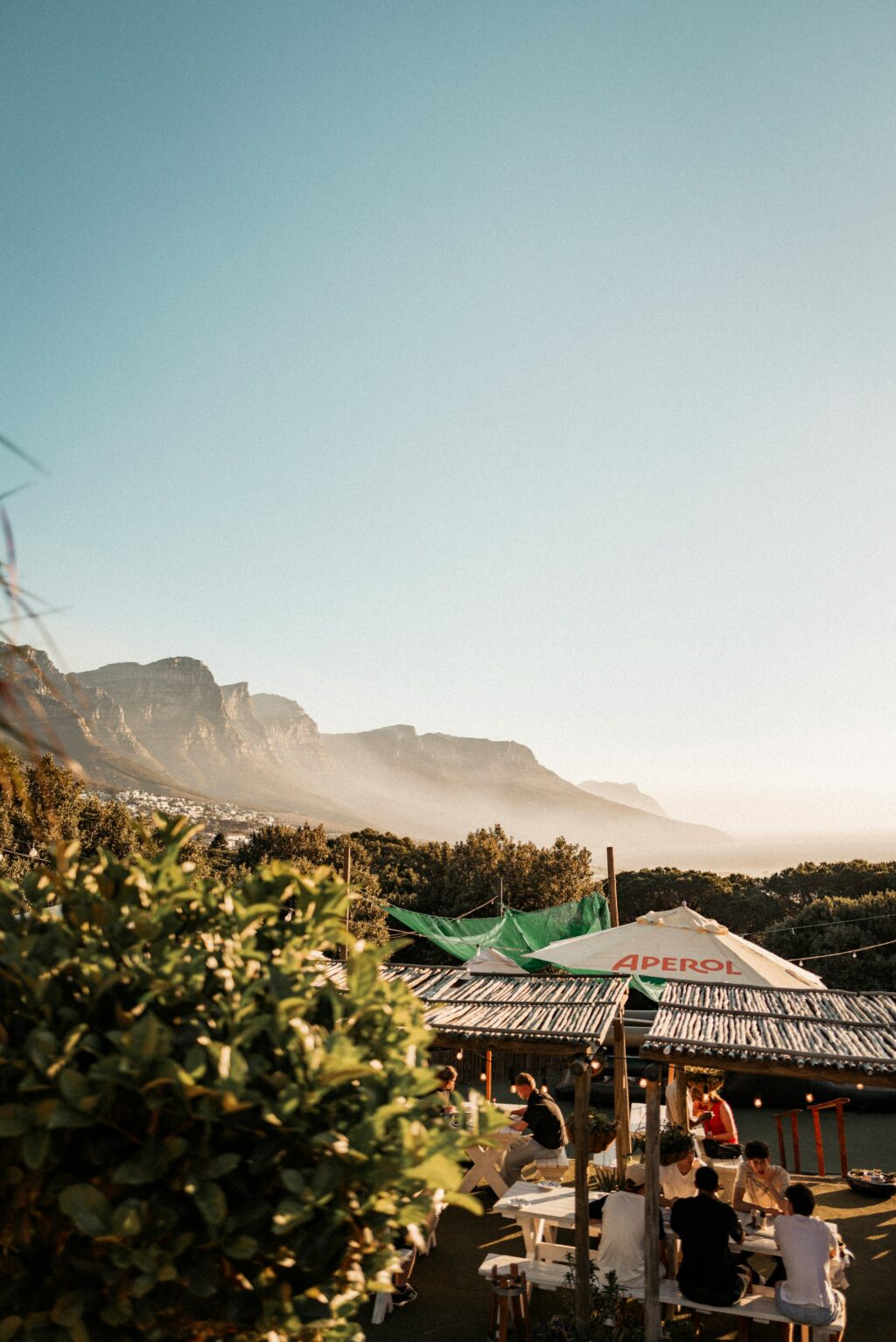
Winter restaurant culture in Cape Town is its own reward. Seasonal menus appear. Fireplaces are lit. Tables that were booked solid for weeks become available with a day’s notice. Ayanda’s trusted-guest list for Kloof Street is precise and personal.
Kloof Street House; the Victorian landmark two minutes from Welgelegen, becomes something close to theatrical in winter, with fireplaces roaring in its cluttered, characterful rooms. It is the place for a long dinner, not a quick one.
Black Sheep; reliable at any time of year, but winter unlocks its seasonal blackboard menu, where the real cooking happens.
Thali; just off Kloof Street, dimly lit, serving Indian tapas-style dishes that are exactly what the cold asks for. “Sophisticated, cosy, and tucked away,” Ayanda says. “It’s warmth in a plate.”
For fine dining, Salsify at the Roundhouse in Camps Bay; a national monument building with panoramic Atlantic views, offers some of the city’s best seasonal seafood, closer to An African Story than almost anywhere worth mentioning.
The Time Out Market at the V&A Waterfront, the Old Biscuit Mill in Woodstock, and the Oranjezicht City Farm Market (Saturdays and Sundays, year-round) all continue through winter and offer the chance to eat well and move through the city without the summer crush.
Before You Go
Cape Town winter runs roughly from June through August, with May and September offering the gentlest transitions. Average temperatures sit between 12°C and 18°C, cool enough for a jacket, warm enough for a terrace table at midday. Rain comes in fronts, not continuously. A cold morning can give way to a bright afternoon. Pack layers, not a single heavy coat.
Both Welgelegen House and An African Story are ideally positioned for winter travel. Welgelegen, at the foot of Table Mountain in the Gardens neighbourhood, places guests within walking distance of the mountain, Kloof Street, and the Company’s Garden. An African Story, on the slopes above Camps Bay, faces the Atlantic directly and delivers those winter sunsets, those white caps, that migration of light that one guest flew halfway around the world to document.
The whales arrive in June. The restaurants settle in. The mountain washes clean.
There is a version of Cape Town that only winter guests know. Memory says it best, in the letter she would write to anyone still uncertain: “If you are looking for beauty, comfort, and a more personal connection to this destination, winter may just be the best time to visit.”
She is right. Come and see.
Stay at Welgelegen House in Gardens, or An African Story in Camps Bay, and let our team curate your Cape winter. Download our Cape Winter Guide below, or contact us to begin planning your stay.
RETURN Africa | Cape Collection – Welgelegen House, Gardens, Cape Town | An African Story, Camps Bay, Cape Town | reservations@returnafrica.com